
Experts predict largest dead zone in decades
Chesapeake Bay continues to be impacted from extreme rain and increased river flows
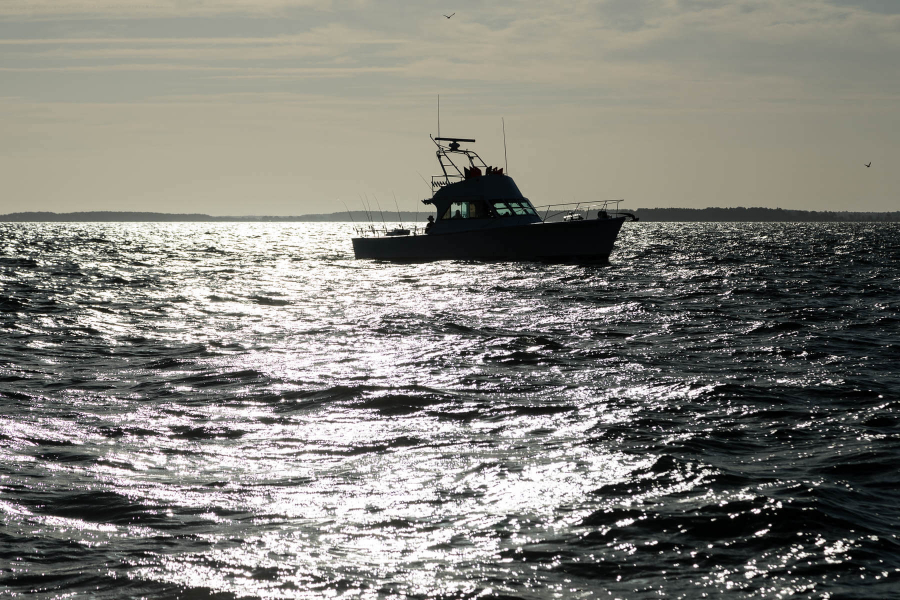
The annual hypoxia, or "dead zone," forecast from University of Maryland Center for Environmental Science and the University of Michigan shows that the Chesapeake Bay will host the largest dead zone this area has seen in decades.
Dead zones are a result of nutrient pollution. Excess nutrients enter the water through polluted runoff from cities, suburbs and rural land, and feed naturally occurring algae. This then fuels the growth of algae blooms. The blooms, which then die and decompose, deplete the dissolved oxygen in the water. This creates hypoxic—or low-oxygen—conditions that suffocate the aquatic life that depend on the oxygen to survive.
This summer's Chesapeake Bay dead zone is expected to be about 2.1 cubic miles, while the volume of water with no oxygen is predicted to be between 0.49 and 0.63 cubic miles during early and late summer. Not only does this prediction trump the dead zone observed during the summer of 2018, according to University of Michigan aquatic ecologist and report coauthor Don Scavia, "This year’s forecast is for the fourth largest dead zone (predicted) in the past 20 years."
The growth of the Bay’s dead zone is due, in part, to increased rainfall in the watershed. Heavier rain leads to stronger river flows, which helps to transport more nutrients and sediment to the Bay. Of considerable concern is the level of nitrogen, which is a naturally occurring nutrient, but excess amounts can lead to harmful algal blooms.
According to the U.S. Geological Survey, the high spring rainfall and streamflow has transported nitrogen to tidal waters in amounts above the long-term average. In particular, the Susquehanna and Potomac Rivers delivered above-average nitrogen loads to the Bay, transporting 102.6 million pounds and 47.7 million pounds respectively, in the spring of 2019. This is the highest nitrogen load from the Susquehanna River since 2011. The long-term average nitrogen loads of these rivers are 80.6 million pounds from the Susquehanna and 31.8 million pounds from the Potomac.
This news doesn’t shock Bruce Michael, the director of the Resource Assessment Service at the Maryland Department of Natural Resources. "The forecast is not surprising considering the near-record high flows in 2018 that have continued into 2019," he said. Increasing rainfall is only going to become more common because of climate change. Already, the amount of rainfall measured during heavy precipitation events in the northeastern United States increased more than 70% between 1958 and 2012.
To stay updated on the state of the dead zone, check out the Maryland Department of Natural Resources’ Eyes on the Bay website, which will post results from their bimonthly Bay water quality monitoring cruises.
Comments
According to current assessment thresholds, menhaden are not experiencing overfishing. Reduction fishery (that which breaks the fish down into meal and oils) has decreased significantly as reduction plants have closed along the coast. The second fishery is for bait, which has increased as limitations have been set for other bait fisheries (such as Atlantic herring).
Biomass and fecundity are both used to measure menhaden. Biomass levels fluctuate as high-spawn year fish age, while fecundity measures the reproductive capacity of the fish. The fecundity threshold is 57,295 eggs and the target 99,467 eggs. The 2016 level was 83,486 eggs. The Atlantic States Marine Fisheries Commission (ASMFC) is working to set two stock assessment benchmarks, one a single-species assessment of menhaden and one that seeks to measure the ecosystem impact of menhaden as a forage fish and filter feeder. The benchmark assessments will be peer reviewed at the end of 2019. You can read more about these assessments and menhaden levels on the ASMFC website: http://www.asmfc.org/species/atlantic-menhaden.
Although man has created the issue due to runoff what is the status of the biomass of menhaden in the Chesapeake Bay as menhaden are the only fish that actually eat the algal blooms?
This is well researched and will report it. I appreciate the level of detail to make the argument of the effects of climate change in this particular geographic area.
Oh no! Thank you for your reporting on this!
Thank you!
Your comment has been received. Before it can be published, the comment will be reviewed by our team to ensure it adheres with our rules of engagement.
Back to recent stories