
Signs of the Chesapeake’s glacial history
In the frigid days of the most recent Ice Age, the Chesapeake Bay watershed was a different place. Glaciers—vast, impenetrable sheets of ice, in some places over a mile thick—covered everything in sight, stretching as far south as Pennsylvania. With so much of the world’s water locked up in ice, oceans were shallower, and the Atlantic coastline was about 180 miles farther east than it is today.
However, around 17,400 years ago, the ice began to melt—fast. The results were especially dramatic in the Susquehanna River Valley. As large amounts of meltwater were unleashed onto the land, much of it cascaded directly into the valley, plowing through the land and obliterating the local ecosystem. Today, we know that drowned river valley by a different name: the Chesapeake Bay.
Though the Bay’s glaciers are long gone, the Bay’s geography still tells the story of their time here. As the glaciers retreated north, they carved deep depressions into the earth, sometimes rerouting rivers and paving the way for new ecosystems to take shape.
Among the landscapes altered by the ice is the Florence Shelly Preserve, a 357-acre nature reserve in Susquehanna County, Pa. The park is home to a glacial pond: a pocket in the land formed by the ancient, retreating glaciers. As the glaciers melted and moved north, they often left deposits of ice in their wake, which became the ponds and wetlands that the preserve is known for today.
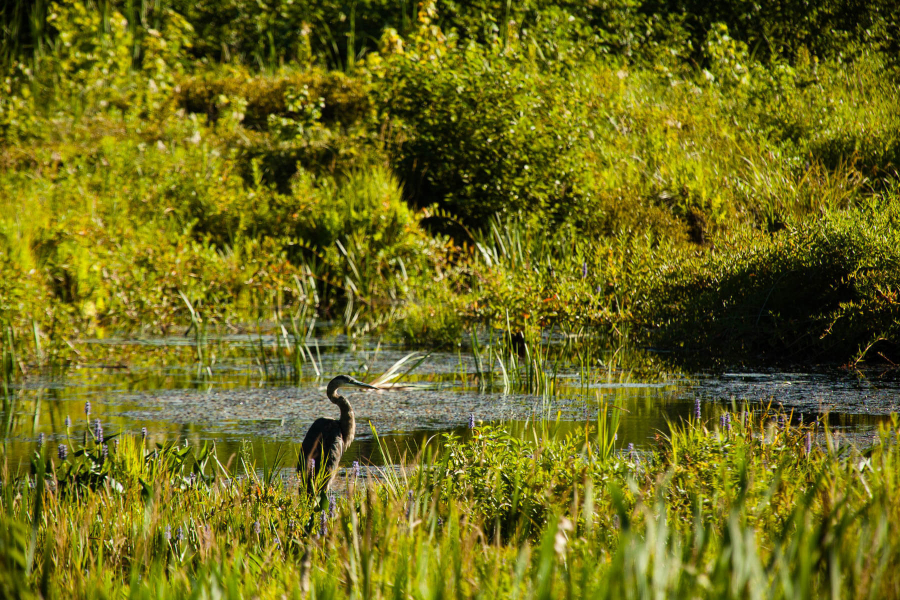
Today, Florence Shelly Preserve is teeming with life. A network of trails weave between buzzing swamplands and forests dense with hemlock trees. Herons sit alertly along the shores of the bubbling marsh while insects skim the surface of the bog. Deep in the wetlands, carnivorous, bright-green sundew plants wait for unsuspecting insects to snare themselves on their sticky hairs. Scientists have also observed the presence of the rare red algae in the reserve—rare because the algae is found only in the purest of water.
The park is truly a celebration of biodiversity. Sometimes, it is too easy to forget that the story of this vibrant, life-rich place began long ago: in a frigid world, thick with ice.
Learn more about the Chesapeake region’s geologic history.
Comments
Im not the sharpest tool in the shed and im open to all theories and facts but ive always wondered how ice up to 1 mile thick could be melted so fast [must have been Death Valley type temperatures for quite some time and it must have been pretty foggy for a little while seeing that 6 " of snow can produce fog for a week while melting sometimes] knowing that 17,000 years is truly a blink of an eye compared to earths history. Can someone please explain because ive ruled out all the factorys and carbon monoxide, methane that the early people produced.
I am a Fairfax Master Naturalist and appreciate every way we can honor and connect with our precious earth! I will visit that park.
Great article except no mention of the meteor that formed the Chesapeake canyon.
Interesting! Because of the red algae in Florida last year, I assumed all red algae was bad. I guess not!
Thank you!
Your comment has been received. Before it can be published, the comment will be reviewed by our team to ensure it adheres with our rules of engagement.
Back to recent stories