Chesapeake Bay Program partners protect more than 9.2 million acres of land across watershed
Partnership achieves 90% of the goal to conserve lands in the region
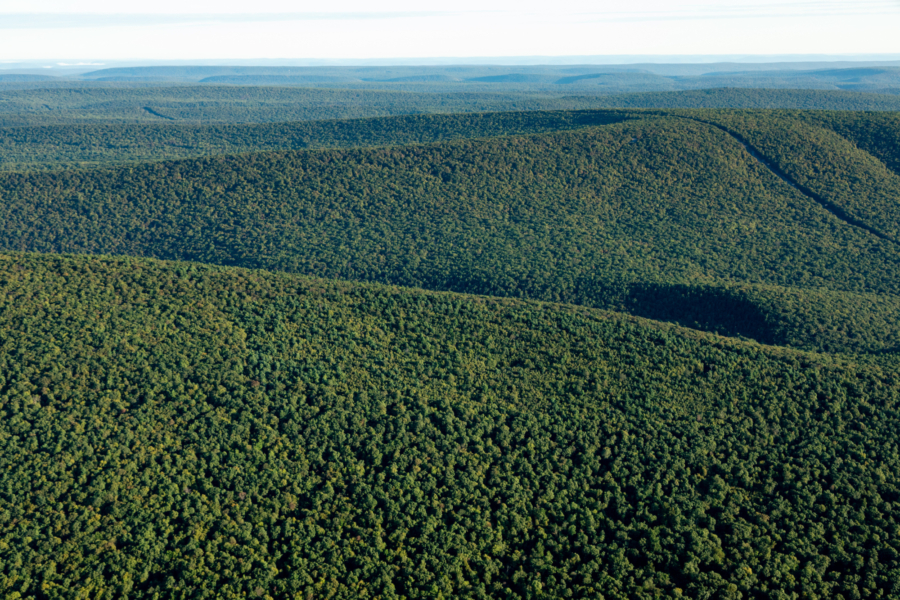
Annapolis, Maryland—Data collected through 2024 show that more than 9.2 million acres of land across the Chesapeake Bay watershed have now been permanently protected from development—approximately 23% of the total land in the region.
While the Protected Lands Outcome will fall short of its target under the 2014 Chesapeake Bay Watershed Agreement, Chesapeake Bay Program partners attained 90% of the goal to protect an additional two million acres across the watershed, conserving approximately 1.8 million acres of land between 2010-2024, an increase of 21%.
Data is reported by the seven watershed jurisdictions–Delaware, the District of Columbia, Maryland, New York, Pennsylvania, Virginia and West Virginia—and reflects conservation efforts undertaken by private businesses, non-governmental organizations (land trusts and others), local governments and other entities.
State agencies currently own 45% of all protected lands in the watershed, followed by the federal government, which holds approximately 23%. Forests make up about 76% of these lands, while wetlands account for 6%. These figures are determined through the 2024 Protected Lands Dataset and the Chesapeake Bay Program’s High-Resolution Land Use/Land Cover Data.
Pennsylvania currently holds the largest number of protected lands in the watershed with 3.7 million acres, followed by Virginia (3.1 million), Maryland (1.7 million), West Virginia (320,000), New York (308,000), Delaware (131,000) and Washington, D.C. (8,400).
“Pennsylvania is proud to lead the Chesapeake Bay watershed with the highest number of protected acres, a testament to decades of collaboration, dedicated funding sources and a shared commitment to conservation," said Pennsylvania Department of Conservation and Natural Resources Secretary Cindy Adams Dunn. "From the foresight of Benjamin Franklin at our nation’s birth to today’s investments in forests, farms and open spaces, Pennsylvanians have long understood that protecting land is about securing a legacy for future generations. By conserving these places now, we are honoring our history while ensuring clean water, healthy communities and resilient landscapes for those who will inherit them.”
Protected Lands in the Chesapeake Bay Watershed By Jurisdiction (2022-2024)
| Jurisdiction | Total Acreage of Protected Lands (2022) | Total Acreage of Protected Lands (2024) | Percentage Change |
| Delaware | 126,178 | 131,105 | +3.9% |
| D.C. | 8,733 | 8,400 | -3.8% |
| Maryland | 1,721,137 | 1,700,342 | -1.2% |
| New York | 331,824 | 307,547 | -7.3% |
| Pennsylvania | 3,645,930 | 3,688,818 | +1.2% |
| Virginia | 2,903,325 | 3,120,421 | +7.5% |
| West Virginia | 372,151 | 320,122 | -14% |
The decrease of protected lands noted in the District of Columbia, Maryland, New York and West Virginia are primarily due to data refinements. In some cases, particularly in the District of Columbia and West Virginia, corrections to land boundaries influenced data updates.
“From generational working farms and forests to natural areas teeming with biodiversity, to historically significant sites that tell our nation’s story, Virginia’s landscapes represent the fabric of the Commonwealth and are vital to protect,” said Virginia Secretary of Natural and Historic Resources Stefanie Taillon. “During the Youngkin Administration, annual funding for the Virginia Land Conservation Fund increased from $10 million to $16 million, allowing $59.5 million in grants over the past four years that have supported 125 projects and conserved over 89,000 acres statewide. We are proud that investments such as this, along with significant on-the-ground efforts from our land conservation partners, have resulted in Virginia being a leader in conserved lands across the Bay watershed and are committed to continuing this important work through the next iteration of the Watershed Agreement.”
Protected lands are defined as areas throughout the Chesapeake Bay watershed with cultural, historical, ecological and agricultural value that have been permanently protected from development. Land conservation can be secured through easements, donations, and the purchasing of properties and development rights.
Land conservation is one of the best ways to protect the health of the Bay watershed amid a growing population. When protected from development, forests and wetlands can improve water quality, provide habitat for wildlife, preserve the region’s history and culture, offer outdoor recreation opportunities and make communities more resilient to changing environmental conditions.
The revised Chesapeake Bay Watershed Agreement, approved by the Chesapeake Executive Council on December 2, 2025, continues to recognize the importance of land conservation in achieving a healthy and restored Bay. The updated Protected Lands Outcome strives to permanently protect critical landscapes within the Chesapeake Bay watershed to protect water quality, enhance biodiversity, support sustainable livelihoods, bolster local economies, honor cultural heritage, and protect the mission and resilience of military installations.
The partnership will aim to accomplish the revised Protected Lands Outcome by permanently protecting an additional two million acres above the goal set in the 2014 Watershed Agreement, with specific targets for conserving riparian forests, wetlands, natural areas supporting healthy streams, agricultural lands, tribal homelands, and urban and community greenspaces.
"Reaching 90% of the original conservation goal represents meaningful progress while underscoring the need for partners across the watershed to maintain the urgency of land conservation to achieve a healthy Chesapeake Bay,” said Chesapeake Conservancy CEO Susan Shingledecker, co-chair of the Chesapeake Conservation Partnership. “Strategic, data-driven land conservation remains one of the most effective tools we have amid unprecedented pressure for land conversion. By working together, we can strengthen local economies, expand outdoor recreation opportunities, protect vital wildlife habitat and restore the health of the Bay for future generations.”
Recent Press Releases
Chesapeake Bay watershed jurisdictions continue working toward nitrogen and phosphorus goals, with sediment goal already achieved

Annual Chesapeake Bay Awareness Week celebrates a watershed “Built by Nature, Protected Together”

A mild dead zone is expected for the Chesapeake Bay this summer